Your AC runs nonstop. Your electric bill keeps climbing. And no matter what you set the thermostat to, certain rooms in your house never feel comfortable.
You might think the problem is your air conditioner. But what if the real issue is hiding in your attic? Poor or outdated insulation is one of the most overlooked causes of high energy bills and uncomfortable homes, especially in Florida where attics can hit 130 to 150 degrees in the summer.
In this article, we are going to explain how insulation affects your HVAC system, why blown-in insulation is a good solution for many Florida homes, and how it can help you save money while staying more comfortable.
Insulation does one simple job: it slows the transfer of heat. In Florida, that means keeping the hot air outside from getting into your home and keeping the cool air inside from escaping.
When your attic is poorly insulated, heat from the sun radiates through the roof and into your living space. Your AC has to work overtime to fight that constant heat load. Even if your system is running perfectly, it is fighting a losing battle against heat that should never have made it into the house in the first place.
The same thing happens in reverse during cooler months. If you use your heat pump or furnace in the winter, poor insulation lets that warm air escape through the ceiling. Your system has to run longer to maintain a comfortable temperature.
Insulation is not a one-time fix that lasts forever. Over time, insulation settles, compresses, gets damaged by pests or moisture, or simply breaks down. If your home is more than 15 to 20 years old and you have never added or upgraded insulation, there is a good chance it is not doing its job anymore.
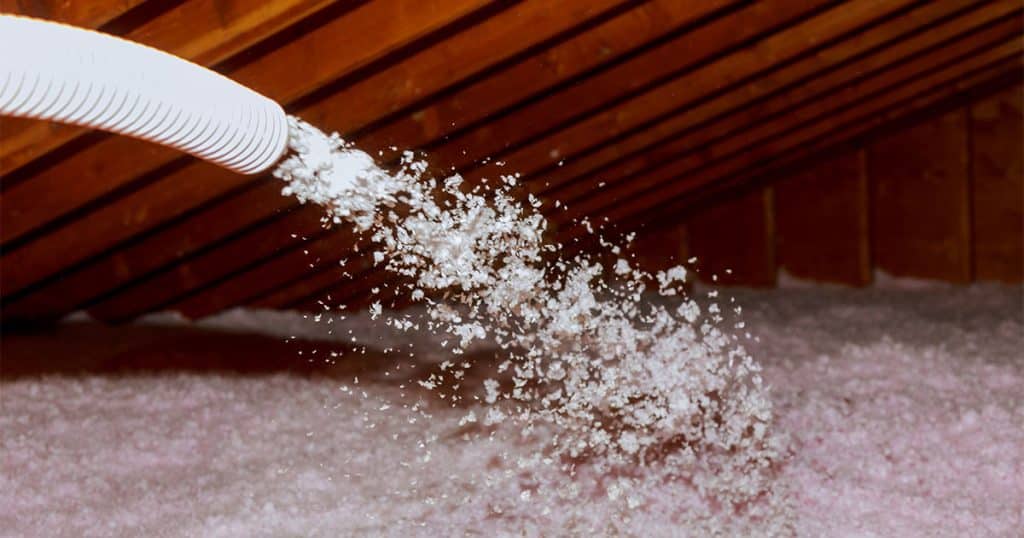
Blown-in insulation is loose-fill insulation that gets installed using a blowing machine. It can be made from fiberglass, cellulose, or mineral wool. The material is blown into your attic or wall cavities, where it fills gaps, covers uneven spaces, and settles around obstacles like wiring, pipes, and joists.
Unlike traditional batt insulation, which comes in pre-cut rolls or panels, blown-in insulation conforms to the space. This makes it ideal for attics with irregular layouts, tight spaces, or existing insulation that needs to be topped off.
Blown-in insulation is measured by its R-value, which indicates how well it resists heat transfer. The higher the R-value, the better the insulation performs. In Florida, the recommended R-value for attics is typically R-30 to R-38, depending on your location and the type of HVAC system you have.
Here are some common signs that your insulation is not doing its job.
If your electric bill has been creeping up year after year and your usage has not changed, poor insulation could be the reason. When heat enters your home freely, your AC has to work much harder and run much longer to maintain the same temperature.
Some rooms feel like a freezer while others stay warm no matter what. This often happens because certain parts of the house have better insulation than others. Rooms directly under the attic with poor insulation will feel warmer because heat is radiating down through the ceiling.
If your system runs constantly during the summer and still struggles to keep the house cool, insulation could be a major factor. Even a properly sized, well-maintained AC system cannot overcome the heat gain from a poorly insulated attic.
Touch the ceiling in a top-floor room during the middle of a summer day. If it feels warm or hot to the touch, heat is transferring through the ceiling into your living space. This is a clear sign that your attic insulation is not providing enough of a thermal barrier.
Poor insulation or air leakage in ductwork can cause condensation inside walls or ceilings. This creates the perfect environment for mold and bacteria growth. If you notice moisture stains, musty smells, or visible mold, insulation and air sealing should be part of the solution.
Blown-in insulation reduces the amount of heat entering your home, which means your AC does not have to work as hard. When your system runs less, you use less electricity, and your bills go down.
According to the U.S. Department of Energy, proper attic insulation can reduce heating and cooling costs by 10 to 50 percent, depending on how much insulation you had before and how much you add. For a home in Florida where cooling costs make up a large portion of the electric bill, the savings can add up quickly.
Blown-in insulation also helps your HVAC system last longer. When your AC does not have to run as often or work as hard, there is less wear and tear on the compressor, fan motor, and other components. This can extend the life of your system and reduce the likelihood of expensive repairs. Regular HVAC maintenance combined with proper insulation creates the best environment for system longevity.
Yes. Blown-in insulation is effective in Florida homes, especially in attics. While Florida does not have the extreme cold that northern states deal with, we do have extreme heat. Attic temperatures in the summer can easily exceed 140 degrees. Without proper insulation, all that heat radiates down into your living space.
Blown-in insulation also helps with humidity control. By reducing the heat load on your HVAC system, the system can run more efficiently and dehumidify the air more effectively. In Florida, controlling humidity is just as important as controlling temperature.
One concern people sometimes have is whether blown-in insulation will settle or compress over time. It does settle slightly after installation, but quality insulation installed to the correct depth will maintain its R-value for many years. A professional installer will account for settling and blow in enough material to achieve the target R-value even after it settles.
Installing blown-in insulation is relatively quick and minimally invasive. Here is what the process typically looks like.
Most attic insulation jobs can be completed in a few hours, depending on the size of the attic and the amount of insulation being added.
Yes, in most cases. If your existing insulation is in decent shape but just not thick enough, blown-in insulation can be added right on top. This is one of the advantages of blown-in insulation. It fills in around the old material and brings the total R-value up to where it needs to be.
However, if the old insulation is wet, moldy, or damaged, it should be removed first. Adding new insulation on top of compromised material will not fix the underlying problem and could make things worse.
At ABS Heating and Air, we now offer blown-in insulation as part of our commitment to helping customers stay comfortable and save money. We understand that insulation and HVAC performance go hand in hand. A great air conditioning system cannot overcome poor insulation, and great insulation will not help if your AC is undersized or poorly maintained.
When we come out for an estimate, we can assess your current insulation levels, check for air leaks, and let you know what improvements will have the biggest impact on your comfort and energy costs. We take the same honest, no-pressure approach to insulation that we do with all our HVAC services.
Blown-in insulation is one of the most effective ways to reduce your cooling costs, improve comfort, and take strain off your HVAC system. It works by slowing the transfer of heat into your home, which means your AC does not have to work as hard to maintain a comfortable temperature.
If your energy bills are high, your home feels uneven, or your AC runs constantly, poor insulation is likely part of the problem. The good news is that upgrading your insulation is a one-time investment that pays off year after year.
If you are in the Ocala area and want to find out whether blown-in insulation makes sense for your home, give us a call. We will take a look, give you an honest assessment, and help you make a decision that improves your comfort without breaking the bank.
The cost depends on the size of your attic, how much insulation is needed, and the type of material used. On average, blown-in insulation for a typical attic in Central Florida might range from $1 to $3 per square foot installed. The investment usually pays for itself in energy savings within a few years.
Blown-in insulation can last 20 to 30 years or more if installed correctly and not exposed to moisture or pest damage. It will settle slightly over time, but quality insulation installed to the proper depth will maintain its effectiveness for many years.
Insulation is a major factor, but it is not the only one. If your HVAC system is old, inefficient, or undersized, or if you have significant air leaks around doors and windows, those issues should also be addressed. Insulation works best when combined with a properly sized, well-maintained HVAC system and good air sealing.
It is possible to rent a blowing machine and do it yourself, but we do not recommend it. Proper installation requires knowing how to measure R-value, seal air leaks, avoid blocking ventilation, and ensure even coverage. A professional installer has the experience and tools to do the job right the first time.
For attics in Florida, the Department of Energy recommends an R-value of R-30 to R-38. The exact recommendation depends on your location within the state and your HVAC system type. A professional can measure your current insulation and tell you how much more you need to reach the recommended level.
Indirectly, yes. By reducing the heat load on your HVAC system, the system can run more efficiently and dehumidify the air more effectively. Proper insulation also reduces condensation in ductwork, which can contribute to mold and moisture problems. However, insulation is not a substitute for a properly functioning AC system or a dedicated dehumidifier if humidity is a major issue.