
Quick Answer: An AC leaking water inside is usually caused by a clogged condensate drain line, a frozen evaporator coil, or a damaged drain pan. Turn the system off and check your air filter. If water keeps showing up or you see ice, call a licensed HVAC technician.
You walk into the hallway and step in a puddle. Or you spot a brown stain spreading across the ceiling near the air handler closet. In Ocala and Belleview, this is one of the most common summer HVAC calls.
If your AC is leaking water inside, the good news is that the cause is usually simple. The bad news is that it will not fix itself. Water with nowhere to go keeps spilling, and it can ruin drywall, flooring, and insulation along the way.
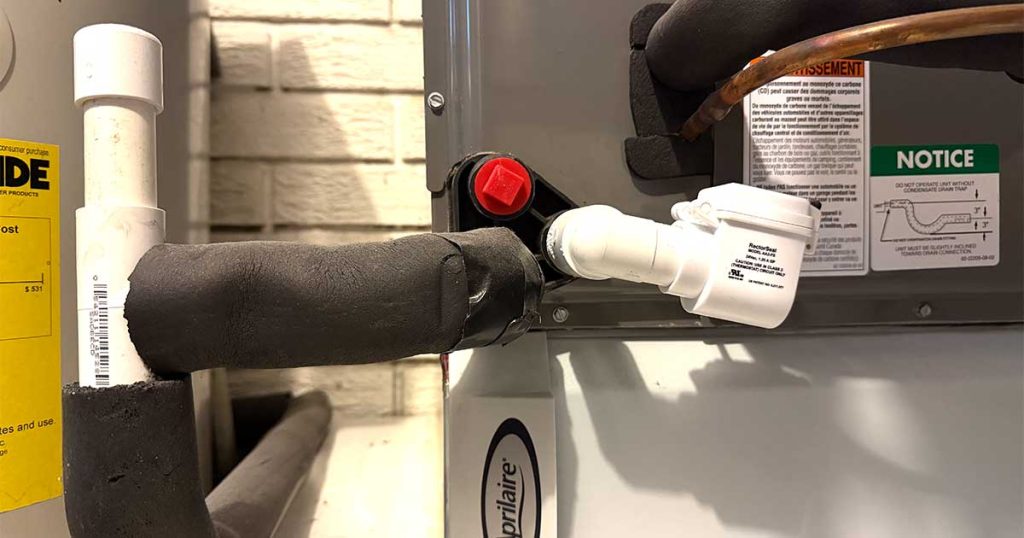
Here are the three most common reasons for an AC leaking water indoors, plus what you can safely check yourself.
Your air conditioner does two jobs. It cools the air, and it pulls moisture out of it. As humid air passes over the cold indoor coil, water forms on the coil. It is the same thing you see on a glass of iced tea on the lanai.
That water drips into a drain pan under the coil. A PVC drain line then carries it outside. On a muggy Central Florida day, your system can pull several gallons of water out of your home’s air.
When any part of that path fails, the water ends up on your floor instead of outside.
This is the most common cause of indoor AC leaks we see in Marion County. The inside of a drain line stays dark, warm, and wet. That is a perfect place for algae and sludge to grow. Over time, the buildup blocks the line. Water backs up into the pan until it spills over.
An AC drain line clog in Ocala tends to show up in late spring and summer. That is when your system runs the longest and removes the most moisture. Snowbird homes see it too. Sludge dries out while the system sits idle, then breaks loose and plugs the line once cooling season starts.
That last sign matters. Many Florida homes have a backup drain line that exits above a window. If water drips from there, your main line is blocked, even if nothing is leaking inside yet.
If you see ice on the copper refrigerant lines or the indoor coil, you have a different problem. When the coil freezes, the ice melts later and can overwhelm the drain pan.
The most common cause is a dirty air filter. A clogged filter chokes off airflow. The coil gets too cold, and ice forms. Low refrigerant from a leak or a weak blower motor can cause the same thing.
If your coil is frozen, turn the cooling off and set the fan to ON so the ice can melt. Replace the filter. If the coil freezes again, low refrigerant is a likely cause. That needs a licensed technician with the right tools, and our AC repair team in Ocala can find the source and fix it.
Many homes in our area still have older air handlers with metal drain pans. After years of holding water, those pans can rust through or crack. Homeowners we help with AC service in Belleview often find this problem in garages and closets where the unit has been in place for decades.
Other parts of the drain system can fail too:
A rusted pan usually means the air handler is aging. At ABS Heating & Air, we look for a repair first and share what we find so you can decide.
Florida humidity means your drain line works harder here than in most of the country. A few simple habits go a long way:
During a tune-up, our technicians inspect the condensate drain and evaporator coil, where most leaks start. Catching buildup early costs far less than fixing a water-stained ceiling.
It is best not to. Running the system keeps adding water to an overflowing pan, which can damage ceilings, floors, and wiring. If a float switch has shut the unit off, do not bypass it. It is doing its job. Turn the system off and call for service.
Have the drain line checked and cleaned at each maintenance visit, ideally in spring and fall. Central Florida humidity keeps the line wet most of the year, so algae grows faster here. Changing your filter on time also helps keep dirt out of the drain.
In summer, your AC runs longer and pulls much more moisture from the air. More water through the drain line means small clogs turn into big ones faster. Heat waves and afternoon storms add to the load, so drain problems often show up during the hottest, most humid months.
An AC leaking water is a warning sign, not something to live with. Most of the time the fix is simple, but the sooner it gets checked, the less damage you deal with.
If you have an AC drain line clog in Ocala, Belleview, or anywhere in Marion County, ABS Heating & Air can help. Same-day service is available. Call us at 352-566-1448 or schedule your AC repair online and we will get your system draining the right way again.
Reviewed by Certified Master HVAC Contractor CAC1821195